Our guides are often asked, usually somewhere around the third site of the day, a deceptively simple question: so how long has all this been here? The honest answer takes a while, because this land is not a single Christian moment but a continuous two-thousand-year story — arguably the longest continuous Christian story anywhere outside the Holy Land itself. Asia Minor is where much of the New Testament happened, where the Church worked out what it believed, and where some of its greatest buildings still stand.
So here is the timeline our guides carry in their heads, laid out plainly. It is not exhaustive — a full version would fill a book — but it gives you the spine of it: the events, the people, and the places, in order.

The First Century — The Apostolic Age
It begins, in a sense, with people from this land already in the room. At Pentecost, the crowd in Jerusalem includes Jews "from Pontus, and Asia, Phrygia, and Pamphylia" — every one of those a region of modern Turkey. The faith came home with them.
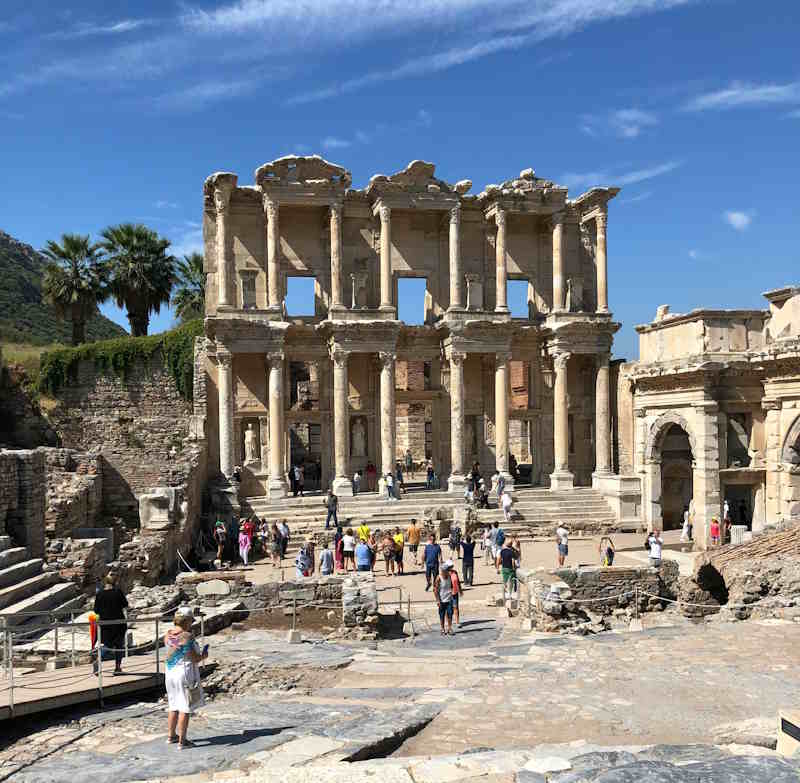
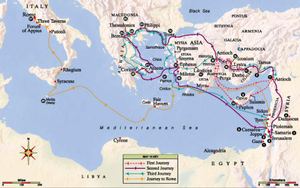
Then come the great names. Paul of Tarsus — born in what is now southern Turkey — criss-crosses Asia Minor on his journeys, and spends nearly three years at Ephesus. At Antioch on the Orontes (modern Antakya), the followers of Jesus are first called Christians. John the Apostle settles at Ephesus in his old age, traditionally bringing Mary with him; and around the year 95, exiled to Patmos, he writes the Book of Revelation to the seven churches of Asia. By the end of the century, Christianity is woven through these cities.
And the disciples were called Christians first in Antioch.
The Second & Third Centuries — Growth Under Pressure
The Church grows in the shadow of the sword. Ignatius of Antioch is led across Asia Minor to martyrdom in Rome around 108, writing letters as he goes. Polycarp of Smyrna, a disciple of John, is burned in his own city's stadium around 155. Around 112 the governor Pliny writes to the emperor Trajan asking what to do with Christians, giving us our clearest outside view of the early Church.
Through the third century the persecutions turn systematic under Decius and Valerian, even as the faith keeps spreading inland — into Cappadocia and Pontus, where teachers like Gregory the Wonderworker build lasting communities.
The Fourth Century — Councils and an Empire Converted
This is the hinge of the whole story, and almost all of it happens on Turkish soil. The last and fiercest persecution, under Diocletian, begins in 303. Ten years later Constantine's Edict of Milan ends it. In 325 the First Ecumenical Council meets at Nicaea (modern İznik) and gives the Church the core of the Nicene Creed. In 330 Constantine refounds Byzantium as Constantinople — the Christian capital for the next thousand years.
The century closes in brilliance: the Cappadocian Fathers — Basil of Caesarea, Gregory of Nazianzus, Gregory of Nyssa — shape Christian theology for good, and the First Council of Constantinople (381) completes the Creed. Somewhere in these years, too, a bishop named Nicholas serves at Myra on the southern coast — the man who became Santa Claus.
The Fifth to Eleventh Centuries — The Byzantine Centuries
The great councils continue here. The Council of Ephesus (431) meets in the Church of Mary and declares Mary Theotokos, "God-bearer." The Council of Chalcedon (451) gathers just across the water from Constantinople. In 537 the emperor Justinian completes Hagia Sophia, the largest church in Christendom for nearly a thousand years. The Seventh Ecumenical Council returns to Nicaea in 787 to settle the question of icons.
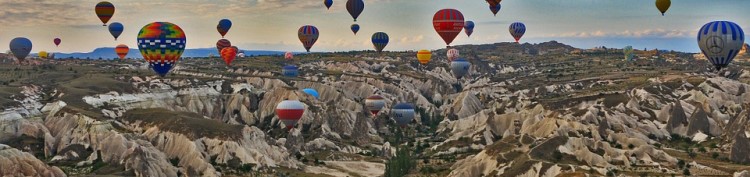
Through these centuries Cappadocia fills with rock-cut churches and underground refuges, monasteries rise on the cliffs and islands, and Asia Minor is simply the Christian heartland of the East. Then, in 1054, the Great Schism divides Eastern and Western Christianity — a fault line that still runs through this land.
1453 and the Ottoman Centuries
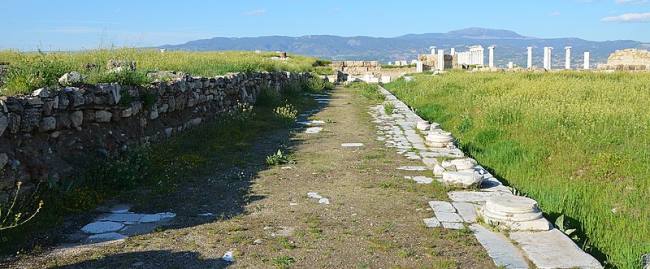
In 1453 Constantinople falls to the Ottomans, and Hagia Sophia becomes a mosque. But Christianity does not vanish. Under the Ottoman system, Greek, Armenian, and Syriac Christian communities continue for centuries, with the Ecumenical Patriarchate remaining in the city — as it does to this day. Philadelphia, fittingly, had been the very last of the seven church cities to hold out, long after the rest of the region had changed hands.

The Modern Era — Memory and Pilgrimage
The twentieth century brought hard change: the upheavals around the First World War and the 1923 population exchange dramatically reduced the historic Christian communities of Anatolia. Yet the heritage remained in the stones, and the world began to return to it.
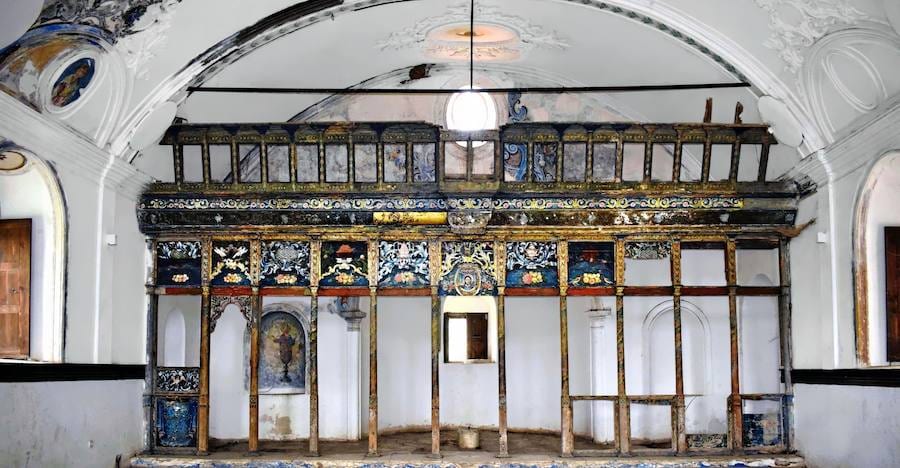
Three popes have visited the House of the Virgin Mary above Ephesus. Hagia Sophia and the rock churches of Cappadocia draw millions. The seven churches of Revelation are once again walked by pilgrims and travelers from every continent. The living Christian presence is far smaller than it once was — but the story did not end. It became something you can visit.
Standing Inside the Timeline
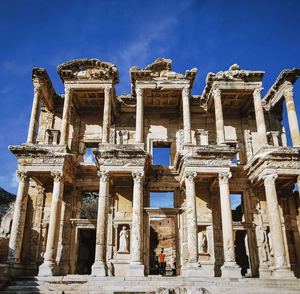
What we love about guiding here is that the timeline is not on a page; it is under your feet. In a single week you can stand in the theater where Ephesus rioted against Paul, the council hall where Mary was named Theotokos, the creed-city of Nicaea, the dome of Justinian, and the valleys where monks painted their faith onto rock. Few places on earth let you walk two thousand years of one story in order.
If you would like to walk some of it with us — our Biblical Turkey grand tour covers the length of this timeline — you are always welcome to contact us. Several of the stops above have their own articles here, from Ephesus to Patmos and the world of the early Church — or browse every article on this site at once.
Gallery

Sources & Further Reading
- Acts 2 (KJV) — Pentecost — with Asia Minor already in the crowd
- First Council of Nicaea — Wikipedia — the council of 325 at modern İznik
- Hagia Sophia — Wikipedia — Justinian’s great church of 537
- House of the Virgin Mary — Wikipedia — the shrine above Ephesus visited by three popes