When people picture the persecution of the early Christians, they usually imagine one long, unbroken horror — lions, arenas, three centuries of relentless slaughter. The truth, here in Asia Minor, was both less constant and, in its way, more unsettling. Persecution came in waves, with long calm stretches between, and the pressure that wore hardest on the seven churches was rarely the sword. It was the slow, daily expectation that you would simply go along.
We have written elsewhere about the texture of that everyday pressure — the imperial cult, the guild banquets, the social cost of saying no — in the world behind the letters. Here we want to walk the harder road: the actual waves of persecution that broke over these cities, and the people whose names we still remember because of them.
Why Christians Were a Problem at All
Rome did not, as a rule, care what you believed in private. What it cared about was loyalty made visible — the pinch of incense before the emperor's image, the public sacrifice, the festival of the city's god. For most people this cost nothing. For Christians it was impossible, and their refusal looked, to Roman eyes, like disloyalty bordering on treason. They met privately, declined the civic gods, and spoke of another king. That was enough to make them suspect.
The word the Romans reached for was superstitio — a dangerous, antisocial foreign cult. Once you understand that the charge was really about belonging rather than belief, the whole pattern of persecution makes sense.
Nero and the First Shadow
The first official violence came under Nero in the year 64, after the great fire of Rome. It was savage, but it was in Rome, not here. Asia Minor felt the chill of it from a distance. What matters for our seven cities is that the precedent was set: the state could, when it chose, treat being a Christian as a capital matter.

Domitian and the Cities of Revelation
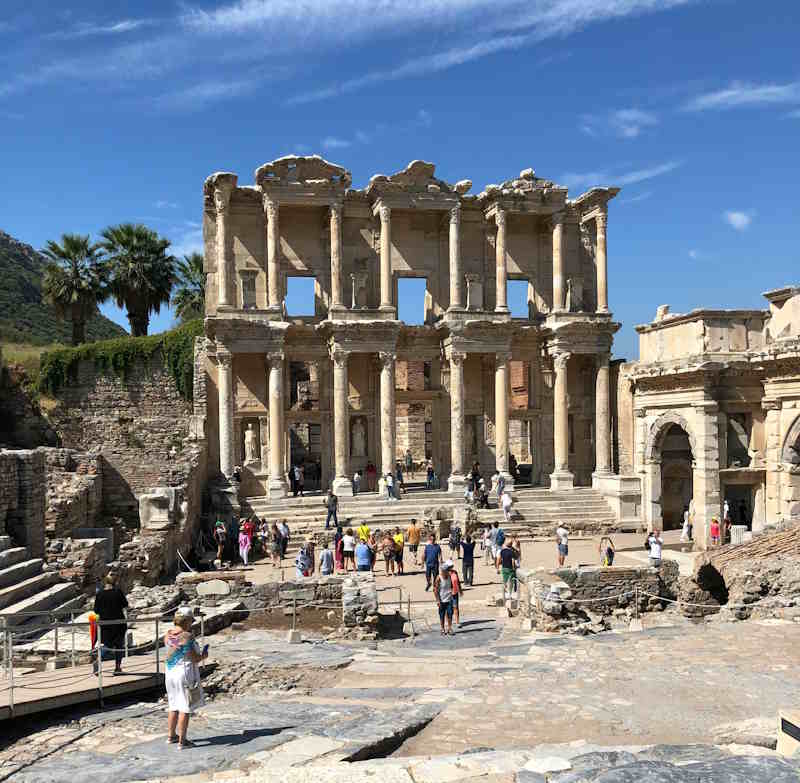
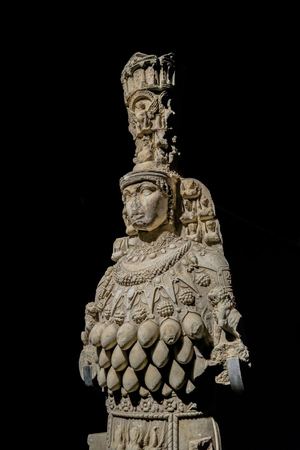
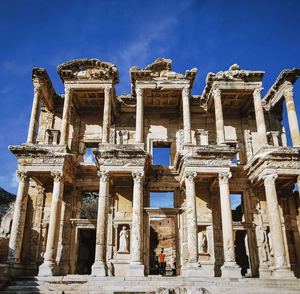
The persecution most directly tied to the seven churches belongs to the reign of Domitian, around the 80s and 90s, and it is the backdrop of the Book of Revelation itself. Domitian pressed the imperial cult hard and liked to be addressed as "lord and god." Ephesus built him an enormous temple — fragments of his colossal cult statue still survive in the museum at Selçuk, and the scale of them is startling.

It was under Domitian that John was exiled to Patmos, and it was to churches living under exactly this pressure that he wrote. Read the letters again with that in mind and they stop sounding abstract. To Smyrna: "fear none of those things which thou shalt suffer... be thou faithful unto death." To Pergamon, Christ recalls "Antipas... my faithful martyr, who was slain among you, where Satan dwelleth" — the one martyr named in all seven letters, killed in the city of the great altar. These are not literary flourishes. They name real fear and real loss.
I saw under the altar the souls of them that were slain for the word of God.
Pliny, Trajan, and the Rule of the Game
The clearest window we have into how this actually worked comes, oddly, from a Roman official. Around the year 112, Pliny the Younger, governing in northern Asia Minor, wrote to the emperor Trajan genuinely unsure what to do with the Christians brought before him — the exchange survives, and you can read it word for word. Trajan's reply became the unwritten rule for generations: Christians were not to be hunted down, but if they were formally denounced and would not recant, they were to be punished.
That single policy shaped everything. It meant persecution was usually local and triggered — set off by a neighbor's accusation, a riot, or a bad harvest blamed on the godless. A Christian living quietly could often pass years untouched. A bishop, or anyone denounced and unwilling to burn the incense, was in mortal danger. Faith in Asia Minor was lived under a sword that hung, most days, by a thread that someone else could cut.
Polycarp and the Stadium of Smyrna
No story shows this better than Polycarp, bishop of Smyrna, burned in his own city's stadium around the year 155 — and, the tradition says, a man who had known the apostle John himself. Hauled before the proconsul and offered the simple way out — curse Christ and go free — the old man answered: "Eighty and six years have I served him, and he hath done me no wrong; how then can I blaspheme my King who saved me?"
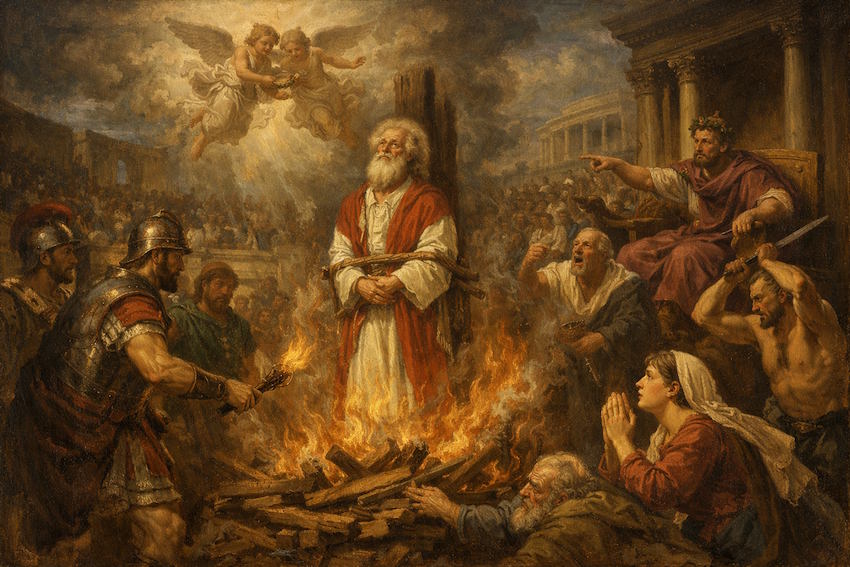
His was the first martyrdom the Church recorded in careful detail, and reading it you feel how a whole community held its breath. Smyrna had been promised, in its letter, a crown of life. In Polycarp the city saw the promise kept.
The Great Waves: Decius, Valerian, Diocletian
For most of the second and early third centuries the Trajanic pattern held — sporadic, local, frightening but survivable. Then, in the mid-third century, the persecutions turned systematic and empire-wide.
In 250 the emperor Decius ordered everyone in the empire to sacrifice to the gods and obtain a certificate proving it. This was new: not waiting for accusations, but demanding proof of conformity from all. A few years later Valerian targeted the clergy directly. Many Christians complied; some bribed officials for false certificates; some fled; and some refused and died. The communities of Asia Minor were tested to their core, and afterward had to wrestle painfully with what to do about those who had lapsed.
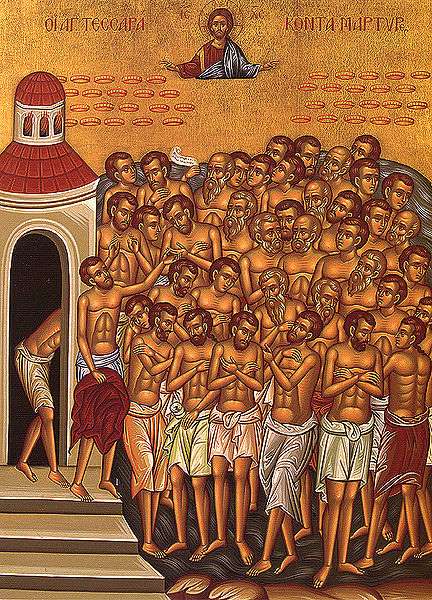
The last and fiercest storm came under Diocletian from 303 — churches demolished, scriptures burned, clergy imprisoned, believers stripped of legal standing. Among the many it claimed were the famous Forty Martyrs of Sebaste, soldiers in eastern Asia Minor who, the tradition says, were driven onto a frozen lake to die rather than renounce their faith. And then, almost suddenly, it was over: with the Edict of Milan in 313, the empire that had spent centuries trying to break the Church turned and embraced it.
What You Can Still Stand Beside
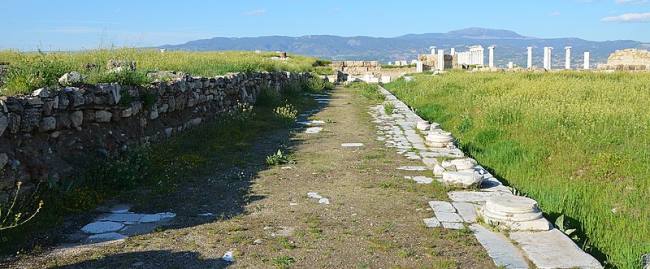
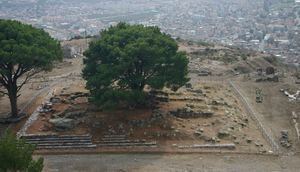
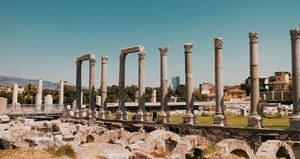
People ask whether any of this is still visible, and the honest answer is: more than you would expect, if you know where to look. The colossal fragments of Domitian in the Selçuk museum. The agora of Smyrna in the heart of modern İzmir, near where Polycarp died. The high acropolis of Pergamon, the "throne" that loomed over Antipas and his community.

We find we cannot stand in these places and tell the story as a simple tale of villains and victims. The early Christians here were not only sufferers; many of them chose, with open eyes, public faithfulness over private safety — and that choice, more than the cruelty against them, is what we find we cannot stop thinking about. The empire offered an easy way out at every turn. Generation after generation, in these specific cities, people decided the way out was not worth the price. Each city's own story of pressure and faith is told in our full set of seven churches articles. You can travel those cities with our guides — the Seven Churches tour visits every site in this story — but the story belongs to anyone willing to listen for it in the stones, and you are welcome to contact us if you would like to.
Gallery
Sources & Further Reading
- Pliny and Trajan on the Christians (c. AD 112) — the governor’s letter and the emperor’s reply, in full
- The Martyrdom of Polycarp — the earliest detailed martyrdom account the Church possesses
- Diocletianic Persecution — Wikipedia — the last and fiercest wave
- Edict of Milan — Wikipedia — the end of the persecutions in 313