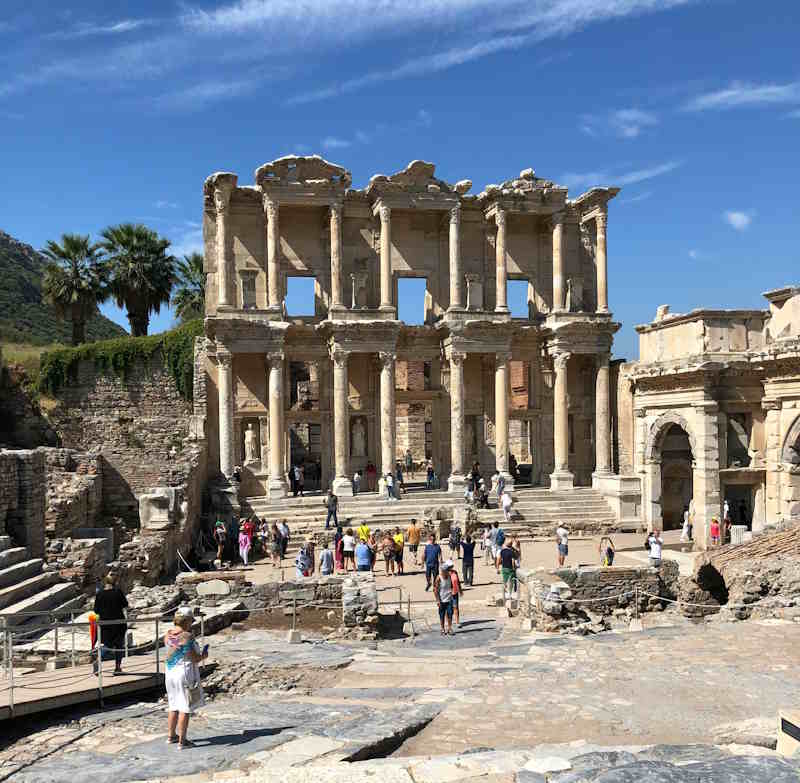
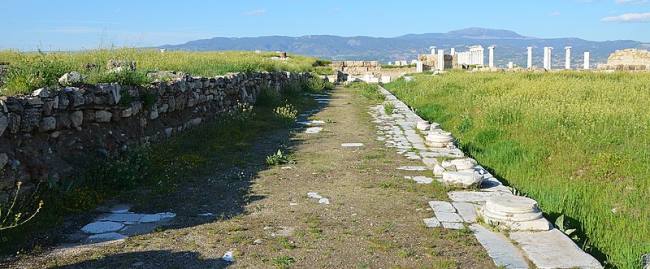
To understand why the seven letters praise some things and warn against others, you have to understand the world the seven congregations lived in. It was not a world that hated Christians for believing odd things. Rome did not, on the whole, care what you believed in private. It was a world that expected you to belong — to take part in the public religious life of your city — and Christians, like Jews before them, found that they could not.
That single tension is the engine behind almost everything in Revelation 2 and 3.
The Imperial Cult
The heart of the problem was the worship of the emperor. We have to be careful with the phrase, because it was not really theology. When a citizen of Asia burned a pinch of incense before the emperor's image, he was not usually making a deep metaphysical claim. He was showing loyalty — declaring that he belonged to this order, this empire, this peace. It was closer to standing for a national anthem than to taking communion.
The province of Asia was, in fact, proud to lead the way. Pergamon won the right, as early as 29 BC, to build the very first temple of the imperial cult in the Roman East. By the time of Revelation the cult had spread through every major city, with its temples, priests, festivals, and processions. To opt out was not seen as a private religious choice. It was seen as disloyalty — a refusal to be a proper member of the community.
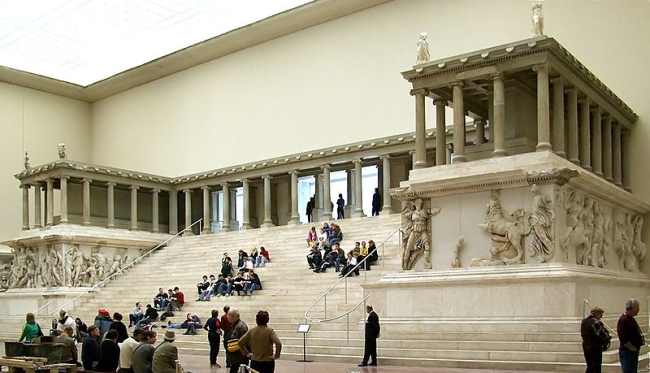
Jews had a recognized exemption; theirs was an ancient nation with an ancient law, and Rome respected that. As long as Christians were regarded as a kind of Jew, they shared the cover. But as the two communities separated, Christians lost it. They were something new, unlicensed, suspicious — a group that met privately, refused the sacrifices, and spoke of another king and another kingdom. The Romans had a word for that sort of thing: superstitio, a dangerous foreign irrationality. It was not a compliment.
The Pressure Was Usually Quiet
We tend to imagine persecution as constant, dramatic, empire-wide. For most of the first three centuries it was not. There were terrible waves — under Nero, later under Decius and Diocletian — but between them lay long stretches of relative quiet. The Roman governor Pliny, writing around the year 112, was genuinely unsure what the law even required; the emperor's reply — the exchange survives, and is worth reading in full — set the tone for generations: Christians were not to be hunted down, but if they were formally accused and would not recant, they were punished.
So the real pressure on the seven churches was rarely the sword. It was social and economic, and it came one ordinary day at a time. Could a Christian craftsman belong to his trade guild, when the guild banquet was held in a temple and the meat had been offered to a god? Could a Christian shopkeeper join the festival of the city's patron deity? Could a Christian decline the imperial sacrifice and still keep his customers, his neighbors, his standing? Most days, no one was being killed. Most days, the question was simply: how much will you go along with?

This is exactly why the letters divide the way they do. The churches praised for endurance — Smyrna, Philadelphia — were the ones refusing to go along, and paying for it socially. The churches warned about "the doctrine of Balaam" at Pergamon and the teaching of "Jezebel" at Thyatira were the ones where a comfortable theology had grown up to permit the compromise: the idols are nothing, so the banquet is only a meal, so keep your guild membership and your income and your faith all at once. The letters say, sharply, that the line cannot be drawn there.

The Cost, When It Came
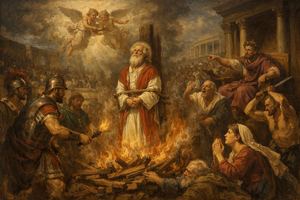
And sometimes the pressure did turn lethal, and the letters do not hide it. Pergamon is reminded of Antipas, "my faithful witness, who was slain among you" — the one martyr named by name in all seven letters. Smyrna is told plainly that some of them will be thrown into prison, and is commanded to be "faithful unto death." Half a century after the letter, Smyrna's own bishop Polycarp would be burned in the city's stadium, refusing to the end to curse Christ with the words, "eighty and six years have I served him, and he hath done me no wrong."
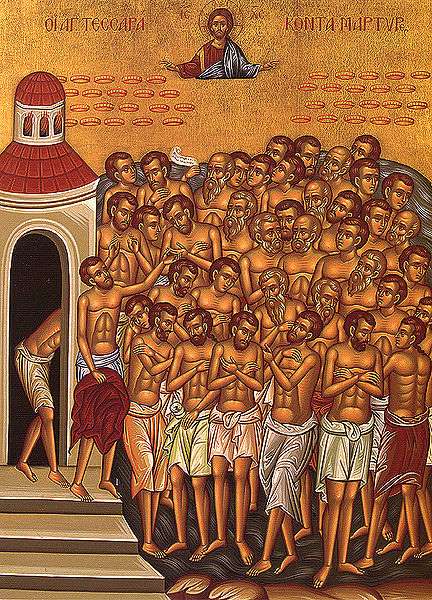
The early Christians of Asia Minor were not only victims, though. That is what makes them interesting. They often understood exactly what refusing the imperial cult meant, and they chose public witness over private safety anyway. The question that fascinates us, after all these years of walking these cities, is why — and we do not think the answer is only doctrine. It is also community, and identity, and a decision about what kind of person one is willing to be in a world that asks you to be someone else.
Why It Still Reads True
When we read these letters with travelers today, the part that lands hardest is usually not the martyrdom. It is the ordinary pressure. Very few of us will ever be asked to die for anything. Almost all of us know the slow, daily pull to go along — to attend the banquet, pour the small libation, keep quiet, keep our position. That is the Thyatiran question, and the Laodicean comfort, and the Sardian sleep. The Roman world that produced these letters is gone. The pressure it embodied is not.
Keep this background in mind as you read the seven. Behind every line of praise is a community holding the line at real cost, and behind every warning is a community quietly deciding that the cost is not worth it. The letters were written into that exact tension. It is the tension that makes them sharp — and the reason they have never gone out of date. Read on through our full set of articles on the seven churches to see how that tension plays out city by city, or walk it yourself on our Seven Churches of Revelation tour.
Gallery

Sources & Further Reading
- Pliny and Trajan on the Christians (c. AD 112) — the governor’s letter and the emperor’s reply, in full
- Imperial cult of ancient Rome — Wikipedia — how emperor-worship actually worked
- The Martyrdom of Polycarp — the earliest detailed martyrdom account the Church possesses
- Domitian — Wikipedia — the emperor behind the pressure of the 90s