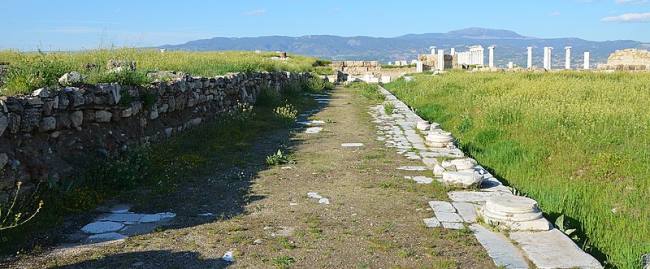
Asia Minor is the western peninsula of modern Turkey — ancient Anatolia — and in the first century it held the Roman province of Asia, where all seven churches of Revelation stood. Every one of the seven sites lies within about 200 kilometers of İzmir, and all seven can still be visited today. Gezginol Tours, a TÜRSAB-licensed travel agency in Kuşadası beside Ephesus, guides the full seven-church circuit with priority-pass entry; site tickets are paid separately, at cost.
People read the phrase "the seven churches which are in Asia" and picture, understandably, the continent — somewhere far to the east. It throws them. So the first thing our guides usually have to do, standing with a map, is gently relocate everyone. The "Asia" of the New Testament is not the continent. It is a small, rich Roman province on the western edge of what is now Turkey — and the whole drama of the seven churches fits inside it.
Let us set the stage properly, because once you understand the land, the letters stop floating in the air and settle onto real ground.
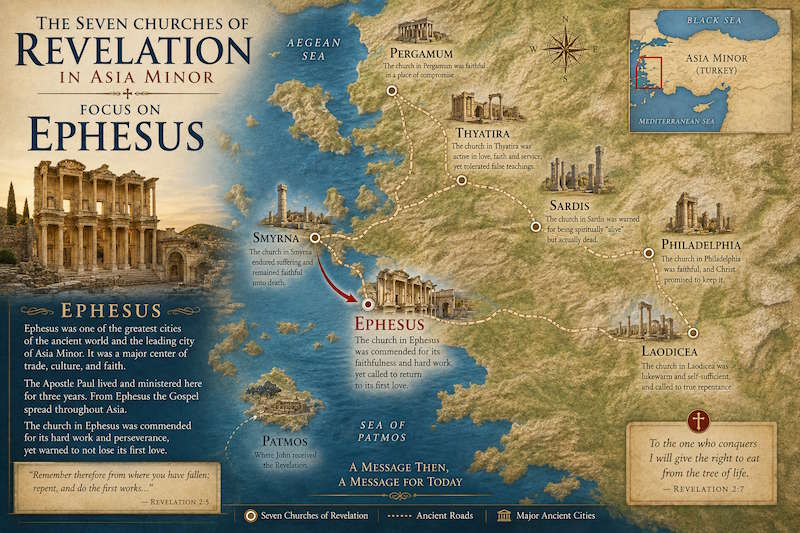
Asia Minor, Anatolia, Turkey — One Place, Three Names
The broad term is Asia Minor — "Lesser Asia" — the great peninsula that juts west from the Asian landmass toward Greece. The Turks call it Anadolu, Anatolia. Today it is the Asian part of modern Turkey, and it has been a bridge between East and West for as long as there has been history to record. Hittites, Phrygians, Lydians, Greeks, Persians, Romans, Byzantines, and Ottomans have all called it home. When Paul and John walked it, it had already been layered with civilizations for three thousand years.
Within Asia Minor, the Romans carved out provinces. The one that matters for us is the province of Asia — the wealthy western third, fronting the Aegean, with its capital at Ephesus. That is the "Asia" of Revelation. Every one of the seven churches stood inside it.
A Province of Cities and Roads
Roman Asia was, above all, a land of cities — and the seven churches were seven of its cities, not seven isolated chapels. Ephesus was a harbor metropolis of perhaps 34,000 to 72,000 people by modern estimates (older books say 200,000 to 250,000, a figure that has not held up). Smyrna and Pergamon were proud, ancient rivals. Sardis had been the capital of the Lydian kings. Thyatira, Philadelphia, and Laodicea were smaller but woven into the same dense network of trade.
And what tied them together was the roads. The province was threaded with excellent Roman highways running up the coast and inland along the river valleys — the Hermus, the Cayster, the Maeander, the Lycus. A letter, or a preacher, could move from city to city in a matter of days. This is why the message spread so fast, and why John's circular letter to the seven could realistically make its rounds. The book of Acts captures it in a single sweeping line about Paul's years at Ephesus: "all they which dwelt in Asia heard the word of the Lord Jesus, both Jews and Greeks."
All they which dwelt in Asia heard the word of the Lord Jesus, both Jews and Greeks.

Why So Much Happened Here
We are sometimes asked why such an enormous share of early Christian history happened in this one province rather than, say, in Greece or Egypt. We think there are three honest reasons.
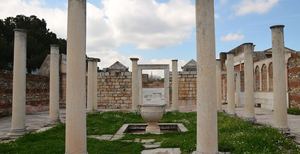
First, the Jewish communities. Long before Paul, large and well-established Jewish populations lived in these cities — in Sardis the synagogue was one of the largest in the ancient world. The early message moved first through these communities and their networks.
Second, wealth and connectivity. Asia was rich, urban, literate, and superbly connected by sea and road. Ideas traveled here faster than almost anywhere in the empire.
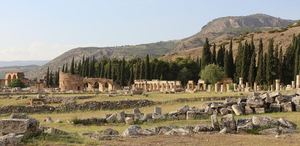
Third, and not least, the people who came. Paul made Ephesus his base for nearly three years. John spent his last decades there and was exiled from its coast to Patmos. By tradition, Mary lived out her final years in the hills above Ephesus. Philip is buried at Hierapolis. The land drew the founders, and they stayed.
The Land You Can Still Walk
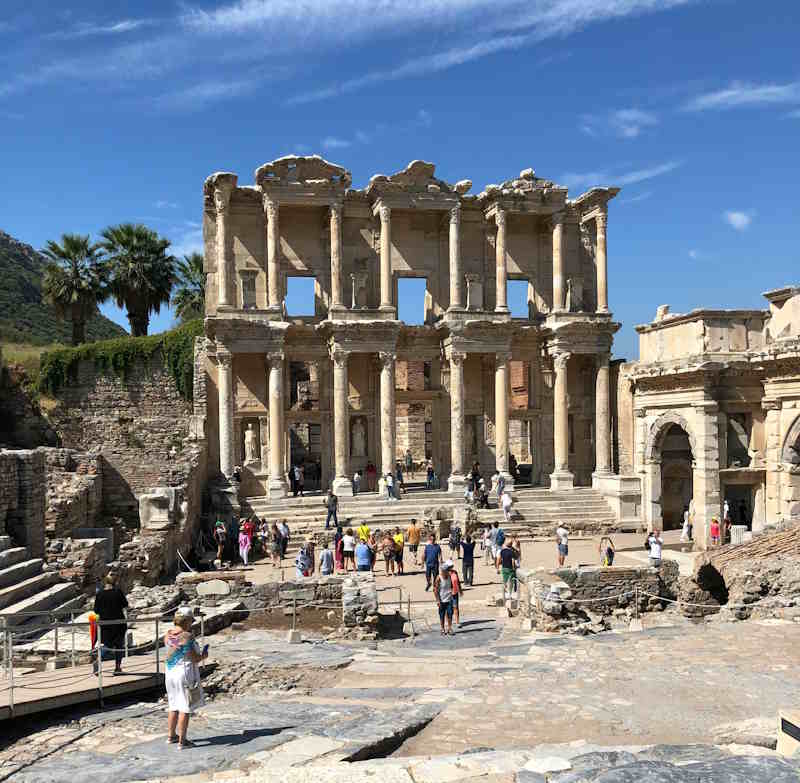
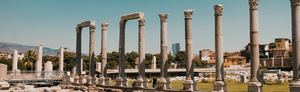
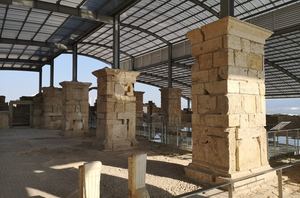
What we find almost unfair, as guides, is how much of this survives. The province of Asia did not vanish under modern sprawl the way some ancient landscapes have. You can still drive the river valleys the couriers used. You can stand in the harbor-less ruins of Ephesus, climb the acropolis of Pergamon, walk the marble of Sardis and Laodicea, and look across the same Aegean toward Patmos that John looked across. The map of the seven churches is not an abstraction. It is a route you can complete in under a week — our map of the seven churches lists every site with its modern town, what survives there and its coordinates.
That is the land behind the letters: a compact, wealthy, deeply connected Roman province on the Aegean edge of Anatolia, dense with cities and threaded with roads, where Jewish communities, Greek culture, and Roman power met — and where a new faith took root and refused to let go.
If you would like the practical version of all this, the loop itself is laid out in our guide to visiting the seven churches, and the longer story in the timeline of Christianity in Turkey. And if you would like to walk the province with people who live in it, you can contact us any time. The full set of church-by-church articles is at our seven churches index, and our Seven Churches of Revelation tour walks the whole province in order.
Gallery

Sources & Further Reading
- Anatolia — Wikipedia — the peninsula and its layered history
- Asia (Roman province) — Wikipedia — the province of the seven churches
- Acts 19 (KJV) — “all they which dwelt in Asia heard the word”
- Sardis Synagogue — Wikipedia — evidence of the great Jewish communities of Asia