This Advent reading plan from Revelation runs four weeks, from Sunday, November 29, 2026, to Christmas Eve, and it rests on one detail many readers pass over: six of the seven letters in Revelation 2 and 3 carry a line in which Christ says he will come. Each week below pairs those lines with the city that first heard them, gives a short reading for every day, and closes with one question to carry through the week.
Advent comes from the Latin adventus, "coming," and the season has long looked in two directions at once: back to the birth at Bethlehem and forward to Christ's return, as Britannica's entry on Advent explains. The seven letters belong to the second direction, and they are short enough to read aloud at a candle lighting. Churches that want a longer season can use our eight-week sermon series on the seven churches; this plan is the shorter, seasonal companion to it.
Which Letters in Revelation Speak of Christ's Coming?
Six of the seven do. Ephesus (Revelation 2:5) and Pergamon (2:16) hear "I will come unto thee quickly." Thyatira is told "hold fast till I come" (2:25). Sardis hears "I will come on thee as a thief" (3:3), Philadelphia "Behold, I come quickly" (3:11), and Laodicea "I stand at the door, and knock" (3:20). Only Smyrna's letter has no such line.
All quotations here are from the King James Version, and you can read the full text of Revelation 2 and 3 on BibleGateway. Notice that the same promise sounds different in each letter. To Ephesus and Pergamon it is a warning; to Thyatira and Philadelphia it is a reason to hold on; to Sardis it is an alarm; to Laodicea it becomes an invitation. That movement, from warning to welcome, is the shape of this Advent reading plan.
How This Advent Reading Plan From Revelation Works
There is one key verse for each Sunday, read aloud when the Advent candle is lit, at home or in church. The weekday readings follow that verse into the rest of Scripture: the city's own letter, a passage that explains the image, and one of the familiar Advent texts from Isaiah or Luke. Each reading is short enough for a family breakfast or the start of a small-group meeting. The question at the end of each week is meant for conversation, not for a right answer.
Six letters across four Sundays means two weeks carry a pair of letters. We have kept the letters in the order John lists them in Revelation 1:11, which is also the order of the old road between the cities, so the plan finishes at Laodicea in the week of Christmas.
Week 1, November 29: Ephesus and Pergamon, "I Will Come Unto Thee Quickly"
Key verses: "Remember therefore from whence thou art fallen, and repent, and do the first works; or else I will come unto thee quickly, and will remove thy candlestick out of his place" (Revelation 2:5), and "Repent; or else I will come unto thee quickly, and will fight against them with the sword of my mouth" (2:16).
The cities: Paul had spent three years teaching in Ephesus, and by the time this letter arrived the church there was a generation old: hardworking, careful about doctrine, and cooling. Our article on Ephesus, the church that left its first love tells its story. Pergamon was a Roman provincial capital, where the governor held the right of the sword over life and death, so Christ answers with a sharper sword, the word of his mouth.

Daily readings: Sunday, Revelation 2:1–7. Monday, Revelation 1:4–8, which opens "Behold, he cometh with clouds." Tuesday, Revelation 1:9–20, John's vision of Christ among the seven lampstands. Wednesday, Acts 20:17–35, Paul's farewell to the elders of Ephesus. Thursday, Revelation 2:12–17. Friday, Hebrews 4:12–16, on the word "sharper than any twoedged sword." Saturday, Isaiah 40:1–11, "Prepare ye the way of the Lord."
Question for the week: What did I love first in my faith, and what would doing those first works look like this December?

Week 2, December 6: Thyatira and Philadelphia, "Hold Fast"
Key verses: "But that which ye have already hold fast till I come" (Revelation 2:25), and "Behold, I come quickly: hold that fast which thou hast, that no man take thy crown" (3:11).
The cities: Thyatira was a working town of trade guilds, famous for its purple dye; Lydia, whom Paul met at Philippi, was "a seller of purple, of the city of Thyatira" (Acts 16:14). Belonging to a guild usually meant sharing its religious banquets, which made faithfulness a costly daily decision, and our article on Thyatira, the trade-guild town explains why. Philadelphia had been shaken for years by aftershocks of the great earthquake of AD 17, and it receives no rebuke at all, only an open door and the promise of becoming a pillar in the temple of God. Our article on Philadelphia, the open door walks through the letter line by line.

Daily readings: Sunday, Revelation 2:18–29. Monday, Acts 16:11–15, Lydia at the riverside. Tuesday, 1 Corinthians 8:1–13, on food offered to idols. Wednesday, Revelation 3:7–13. Thursday, Isaiah 22:20–23, the key of David, which the Philadelphia letter quotes. Friday, Hebrews 10:19–25, "Let us hold fast the profession of our faith without wavering." Saturday, Isaiah 9:2–7, "The people that walked in darkness have seen a great light."
Question for the week: What have I already been given that I am in danger of letting slip, and who is holding on beside me?
Week 3, December 13: Sardis, "As a Thief"
Key verse: "If therefore thou shalt not watch, I will come on thee as a thief, and thou shalt not know what hour I will come upon thee" (Revelation 3:3).
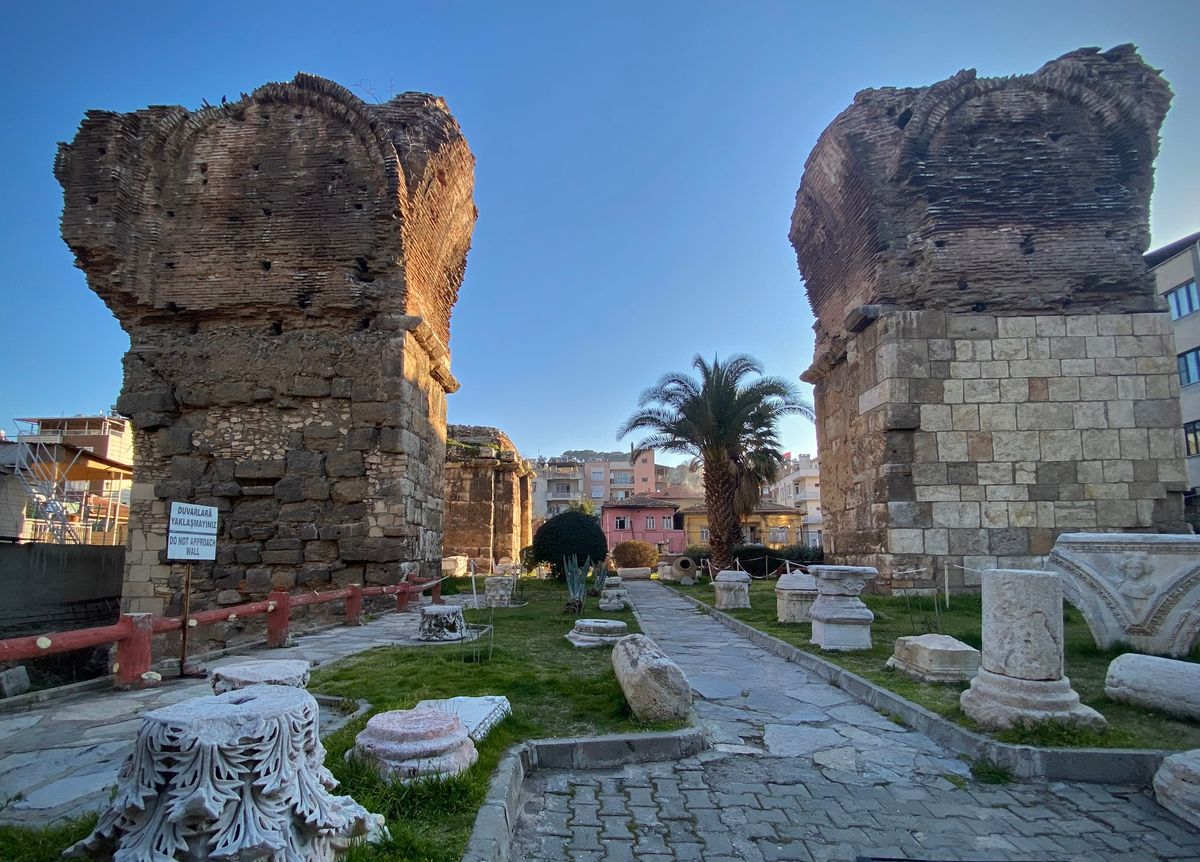
The city: Sardis had been the capital of King Croesus, and its upper city stood on a cliff its people thought no one could climb. The historian Herodotus records how it fell anyway, when an enemy soldier watched a defender climb down for a dropped helmet and led a party up the same path by night. A church told to "be watchful" in that city would not have missed the point. Our article on Sardis, the church that was asleep tells the story in full. Watchfulness is also the oldest theme of Advent, which is why this letter has a Sunday to itself.

Daily readings: Sunday, Revelation 3:1–6. Monday, Matthew 24:36–44, "Watch therefore: for ye know not what hour your Lord doth come." Tuesday, 1 Thessalonians 5:1–11, the day that comes "as a thief in the night." Wednesday, Mark 13:32–37. Thursday, Romans 13:11–14, "now it is high time to awake out of sleep." Friday, Luke 1:26–38, the announcement to Mary. Saturday, Luke 1:39–56, the Magnificat.
Question for the week: Where does my life have a name for being alive while something inside it has gone quiet?
Where Smyrna Fits
Smyrna's letter, in Revelation 2:8–11, is the one with no line about Christ's coming. It speaks to a poor and persecuted church instead, and its promise is "be thou faithful unto death, and I will give thee a crown of life." We suggest saving it for December 26, the day Western churches keep in memory of Stephen, the first Christian martyr (Acts 7). Read it as the first reading after Christmas: the child in the manger is also the Lord for whom Smyrna's bishop Polycarp later died, as our article on Smyrna, the faithful city tells.

Week 4, December 20 to Christmas Eve: Laodicea, "I Stand at the Door, and Knock"
Key verse: "Behold, I stand at the door, and knock: if any man hear my voice, and open the door, I will come in to him, and will sup with him, and he with me" (Revelation 3:20).
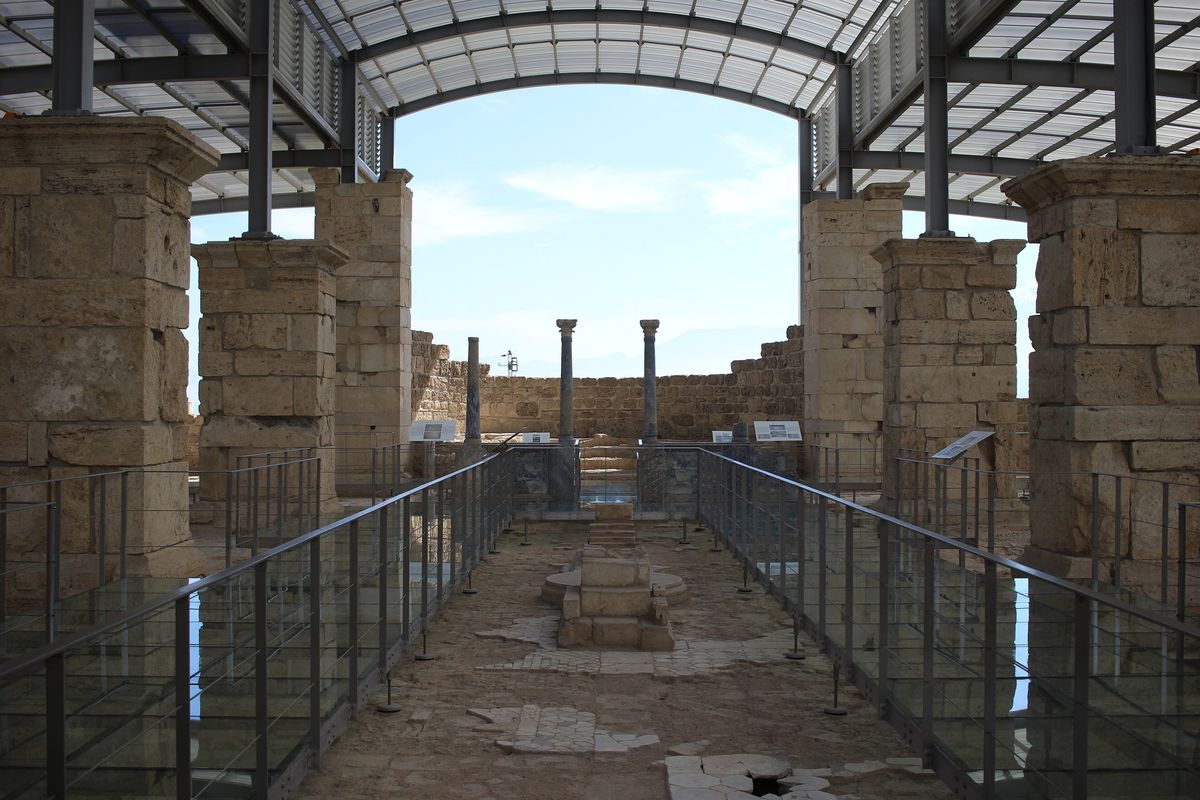
The city: Laodicea was rich enough to rebuild after the earthquake of AD 60 from its own resources, and its letter is the only one with no praise at all. Yet it ends with the tenderest picture in the seven letters: Christ outside his own church, knocking. Our article on Laodicea, the lukewarm church covers the city and its famous water. In the week of Christmas the image meets another closed door, the inn at Bethlehem where there was "no room for them" (Luke 2:7).
Daily readings: Sunday, December 20, Revelation 3:14–22. Monday, Luke 12:35–40, servants who wait so that "when he cometh and knocketh, they may open unto him immediately." Tuesday, Luke 1:67–79, the song of Zechariah. Wednesday, Isaiah 7:10–14. Christmas Eve, Thursday, December 24: Luke 2:1–20, then Revelation 22:16–21, which ends the whole Bible with "Surely I come quickly. Amen. Even so, come, Lord Jesus."
Question for the week: What would it mean to open the door this Christmas, not only to decorate it?
Lessons From the Seven Churches of Revelation for Advent
Read together, the six "coming" lines give Advent a simple sequence of verbs: remember, repent, hold fast, watch, open. They also teach something the season can lose among the lights. The Christ who comes is not a stranger arriving from far away; he is the one who already "walketh in the midst of the seven golden candlesticks" (Revelation 2:1) and knows each church by name. Each letter also ends with a promise "to him that overcometh," and our article on the seven promises to those who overcome gathers them in one place, which makes a good reading for the quiet days after Christmas.
Using the Plan in a Church or Small Group
For a church, the Sunday key verse fits naturally into the lighting of the Advent wreath, read by a different family each week. A small group can work through the daily readings at home and bring the weekly question to its meeting. Families with young children can keep only the Sunday verse and the question; the door at Laodicea and the thief at Sardis are images children remember. If you want to show where the seven cities lie, our map of the seven churches puts them on one page with today's town names.
Walking the Seven Towns in Spring
Many church groups who read the letters through the winter walk the seven towns in spring, when western Turkey is green and the sites are pleasant to explore on foot. Easter falls on March 28, 2027, and the weeks around it are a favorite time for congregations. Our private Seven Churches and Patmos tour visits all seven cities and the island where John received the vision, with a licensed guide in English, Spanish, Portuguese, French, Russian, Italian or German, priority entrance arranged at every site (entrance tickets are paid separately at the official price), and each letter read where it was first heard.
Written by the Gezginol guide team. Sources: the King James text of Revelation 2 and 3 on BibleGateway and Britannica on Advent. Last reviewed: October 2026.
Frequently Asked Questions
When does Advent start in 2026? On Sunday, November 29, 2026. The four Sundays of Advent are November 29 and December 6, 13 and 20, and Christmas Day falls on a Friday, so this plan's last reading is on Thursday, December 24.
What are the seven letters in Revelation? They are seven short messages in Revelation 2 and 3, addressed to the churches of Ephesus, Smyrna, Pergamon, Thyatira, Sardis, Philadelphia and Laodicea, seven cities in what is now western Turkey. Each one follows a similar pattern of praise, rebuke and promise.
Who wrote the letters to the seven churches? John wrote them down on the island of Patmos, recording them as the words of the risen Christ. Revelation 1:9–11 describes the voice that told him to write what he saw and send it to the seven churches.
Is Revelation a good book to read during Advent? Yes. Advent looks forward to Christ's return as well as back to his birth, and the letters in Revelation 2 and 3 are among the plainest New Testament texts on that hope. They are also short, practical and written to ordinary congregations.
Can children follow this Advent reading plan? Yes, in a shorter form. Keep the Sunday key verse and the weekly question, and let them tell the story of each city in their own words. The knock at the door in Laodicea works well with small children.
Our church already follows a lectionary. Can we still use this plan? Yes. Keep your lectionary readings in the service and use this plan for the candle-lighting verse or for home reading during the week. The two fit together, because the Advent lectionaries also speak of watching and waiting.