Yes, the seven churches of Revelation are in a Muslim country: all seven stand in western Turkey, where the government counts 99 percent of the population as Muslim, but which has been a secular republic under its constitution since 1937. All seven are protected archaeological sites in the provinces of İzmir, Manisa and Denizli, open to every visitor, and Christian groups read the letters aloud and pray among their ruins throughout the year.
We guide church groups around this circuit every season, and it is one of the first questions pastors ask us, usually months before they travel: can we read the Bible there, will anyone mind, and where do we go to church on Sunday? This page answers those practical questions. How the congregations themselves came to an end is a separate story, told in our post on what happened to the seven churches.
Are the Seven Churches of Revelation in a Muslim Country?
Yes. All seven are in Turkey, a country with a large Muslim majority but no state religion: its constitution defines it as a secular republic. The ruins of Ephesus, Smyrna, Pergamon, Thyatira, Sardis, Philadelphia and Laodicea are protected archaeological sites, open to visitors of every faith.
Which Country Are the Seven Churches In?
They are all in Turkey, on or near its Aegean coast, and every one of the seven cities named in Revelation 1:11 can still be found on a modern road map. Ephesus lies beside Selçuk, Smyrna is the city of İzmir, and Pergamon rises above Bergama, all three in İzmir province. Thyatira (Akhisar), Sardis (Sart) and Philadelphia (Alaşehir) are in Manisa province, and Laodicea lies just outside Denizli. The island of Patmos, where John saw the vision, is the one place in the story that now belongs to Greece. Our map of the seven churches traces the whole loop, about 470 kilometers by road.
Are the Seven Churches Now Under Islamic Rule?
No, not in the sense the question usually means. Turkey is governed by a civil constitution, not by religious law. The clause naming Islam as the state religion was removed from the constitution in 1928, secularism was written into it in 1937, and the present constitution of 1982 keeps that principle in its second article, as the history of secularism in Turkey sets out. Its Article 24 guarantees freedom of religious belief and states that acts of worship, religious rites and ceremonies shall be conducted freely.
For roughly six centuries, though, these cities did live under Muslim rulers. After the Seljuk victory at Manzikert in 1071, Turkish power spread across Anatolia; by the fourteenth century Turkish emirates held this coast, and Philadelphia, the last Christian town of the region, fell in 1390. The Ottoman centuries followed and came to an end in 1922. The Republic of Turkey was proclaimed the next year, and the exchange of populations with Greece in 1923 ended the Orthodox communities of most of these towns. Before all of that, this land had been one of the heartlands of the faith since the apostles, as our timeline of Christianity in Turkey shows century by century.
Can You Read the Bible and Pray at the Seven Churches?
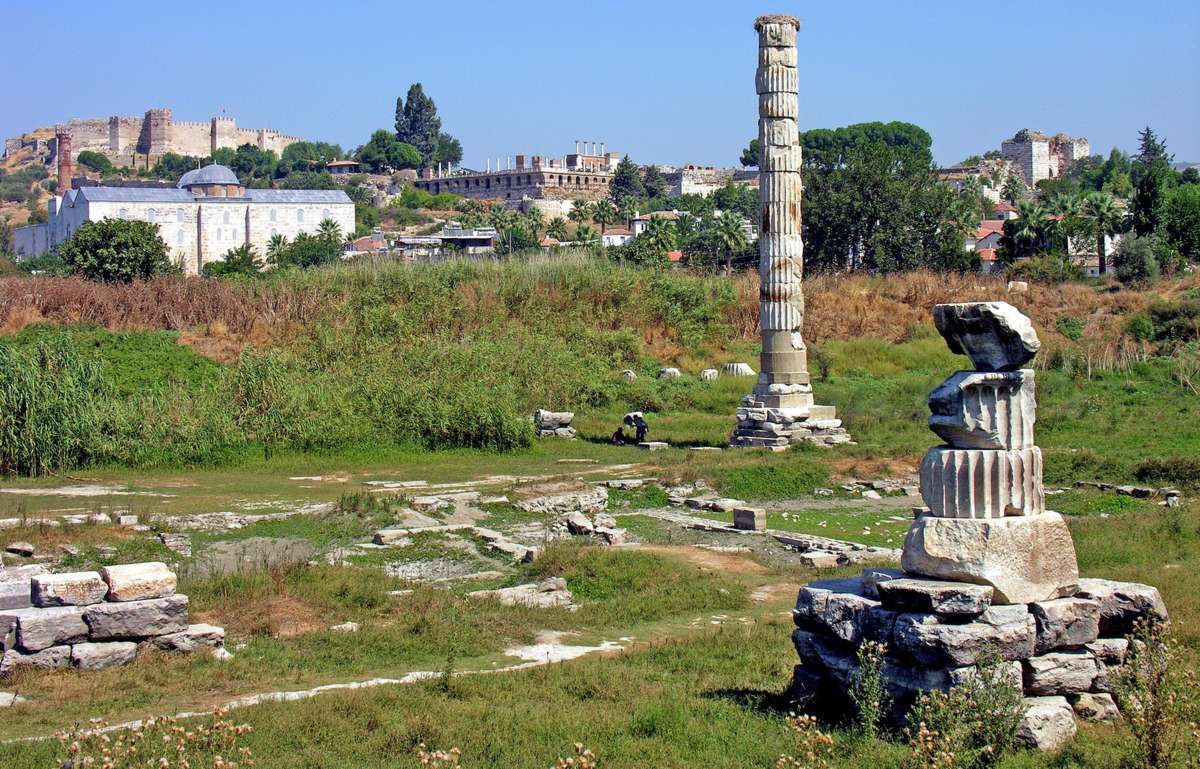
Yes, and most of our groups do. Reading a letter aloud where it was first heard, singing a hymn quietly or praying together for a few minutes is part of an ordinary visit, and site staff and other visitors are used to it. At Laodicea the great church now stands under a steel roof with glass walkways over its floor, and it is our favorite place to read the letter to the lukewarm church out loud. At Philadelphia, whose basilica pillars stand in the middle of Alaşehir, a group reading about the open door of Revelation 3:8 will often hear the call to prayer from the minaret next to the ruins, and neither sound seems out of place.
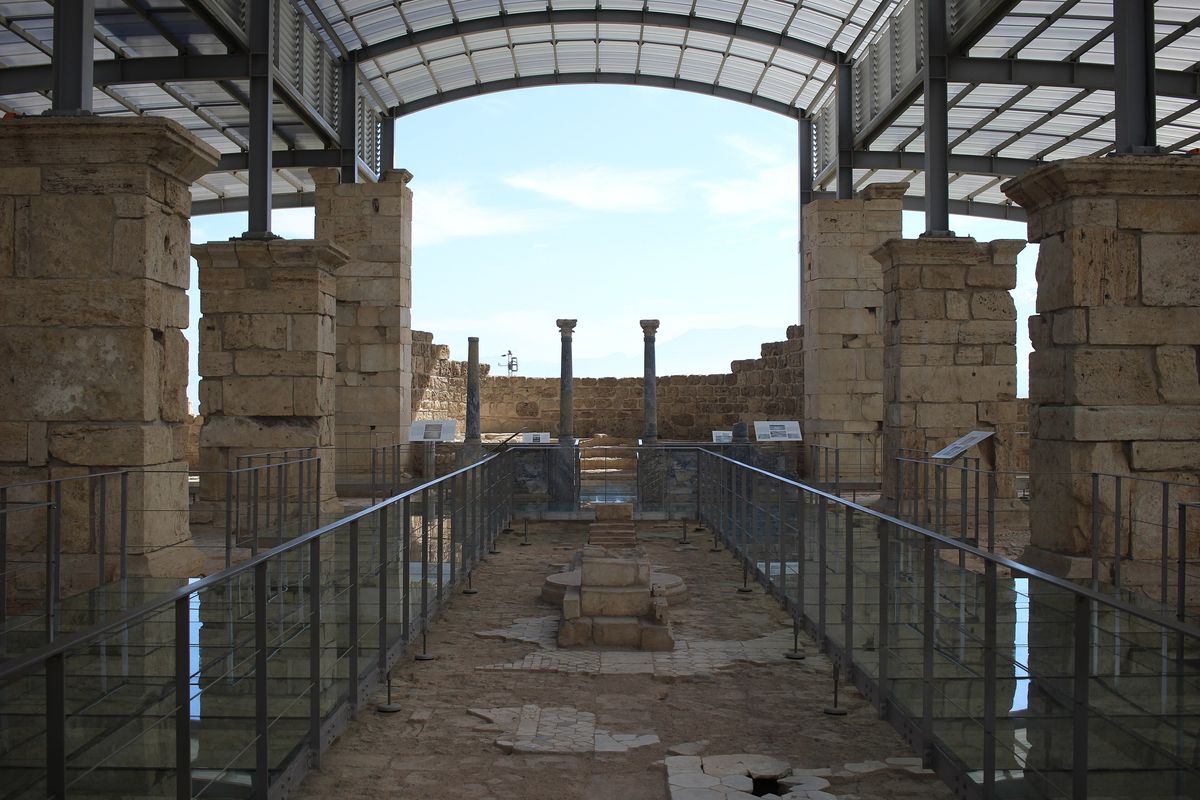
What does need arranging in advance is a formal service. A full liturgy at a state archaeological site, with an altar, vestments and a large congregation, requires official permission, and great occasions are planned that way. On November 28, 2025, Pope Leo XIV and Ecumenical Patriarch Bartholomew led an ecumenical prayer beside the excavated Basilica of St. Neophytos at İznik, ancient Nicaea, for the 1,700th anniversary of the Council of Nicaea, as the Vatican record of the service shows.
Where Can Christians Worship on Sunday Near the Seven Churches?
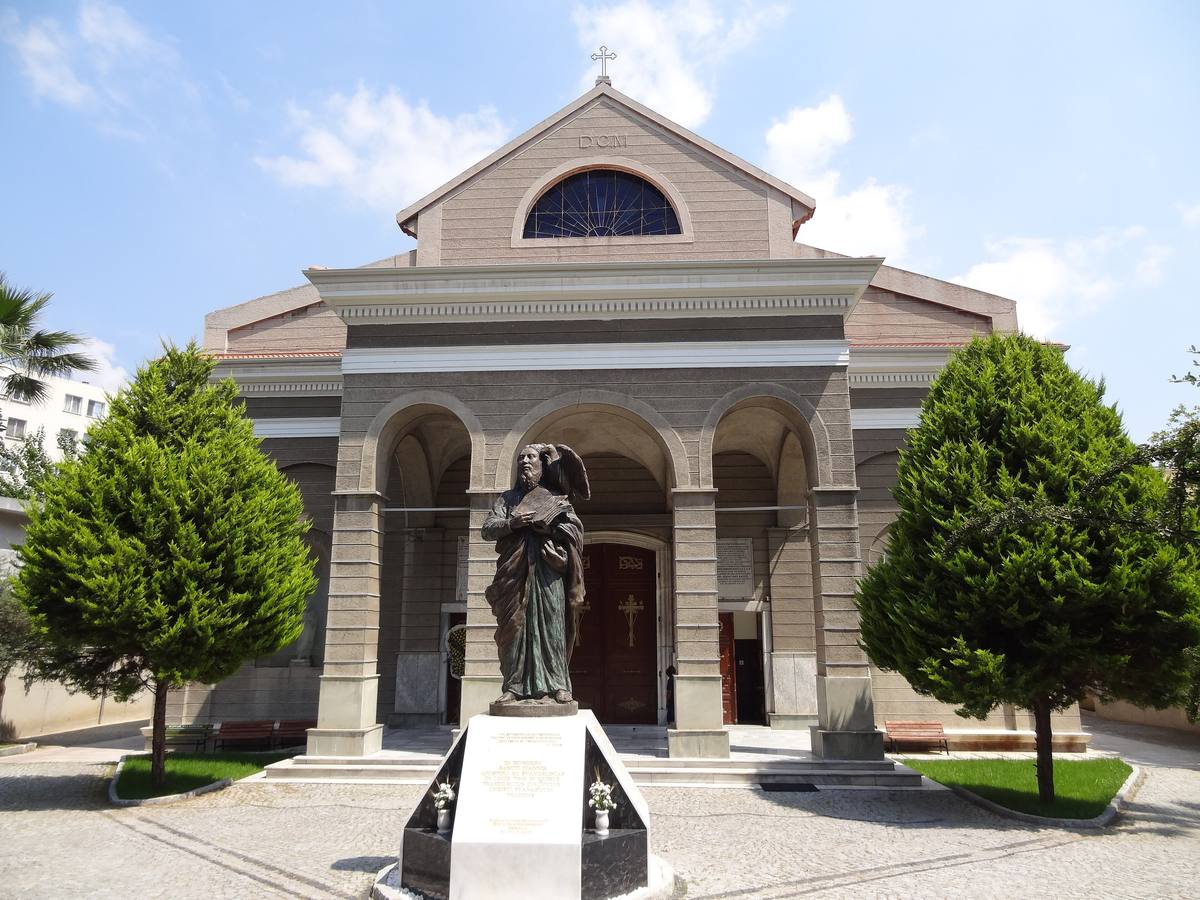
In İzmir, ancient Smyrna, where most of our groups spend at least one night. The city has working churches of several traditions. The Catholic cathedral of St. John in Alsancak holds Sunday Mass in English, Turkish and Polish, according to the cathedral's own website. Smyrna's most famous martyr, the bishop Polycarp, burned in the city's stadium in about AD 155, gives his name to the Catholic church of St. Polycarp, built in 1625 and still in use. His story belongs to the faithful church of Smyrna, one of the two congregations among the seven that received no rebuke.
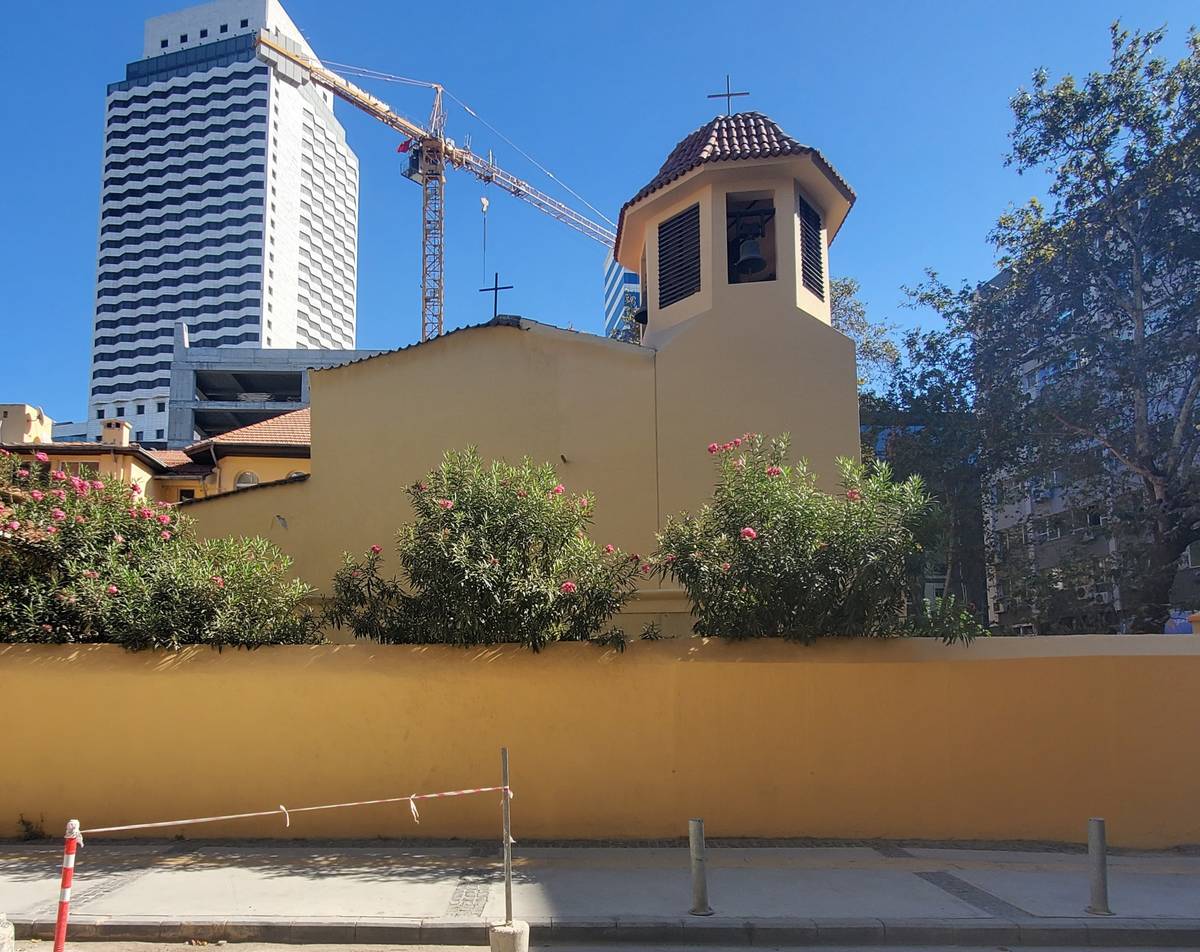
The Anglican church of St. John the Evangelist in Alsancak, built in 1898–99, serves residents and visitors in English. Greek Orthodox services are held at the church of Agia Fotini, and the İzmir Protestant Church gathers a Turkish-speaking congregation. Service times change with the seasons, so check them for the week you travel.
Near Ephesus, Mass is celebrated every day at the House of the Virgin Mary on the hill above Selçuk, outdoors on the esplanade beside the house from May to October, according to the shrine's own schedule. The shrine is cared for by Capuchin friars, and a Sunday Mass there fits easily around a day at Ephesus.

What Should You Wear at the Seven Churches and in Mosques?
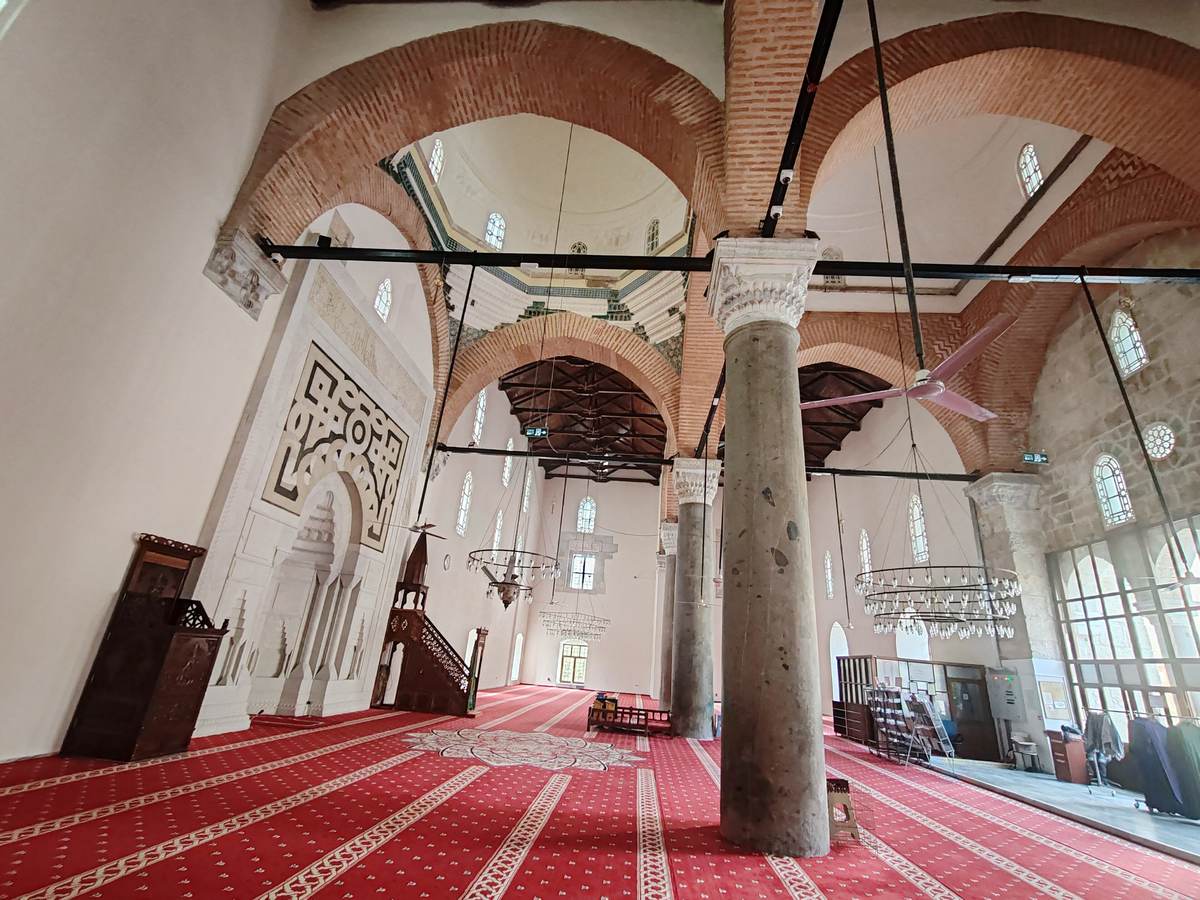
At the ruins there is no dress code at all. They are open-air archaeological sites, and what matters there is the sun: a hat, water and shoes with some grip for worn marble. The one place where dress matters is a mosque. If your group steps inside one, and the İsa Bey Mosque at the foot of Ayasuluk Hill, a few minutes' walk from the Basilica of St. John, is well worth it, shoulders and knees should be covered, women cover their hair with a scarf, and everyone takes off their shoes at the door. Visitors are asked to stay out of the prayer hall during the prayers themselves, above all at the Friday midday prayer, and to ask before photographing anyone at prayer.
How We Plan the Circuit for a Church Group
For groups who want time to read each letter at its own ruin, and a guide who knows where to worship on Sunday, our private Seven Churches of Revelation tour covers the whole circuit. We build time for devotions into every stop, shape the days so that Sunday morning can fall in İzmir or near the House of the Virgin Mary, and arrange coaches for congregations of any size: up to 52 people in one coach, and several guides and coaches for larger groups. We buy the entrance tickets in advance, so the group skips the ticket line; the admission fees are paid separately, at the official price. More on visiting the seven churches is on our blog.
Frequently Asked Questions
Which country are the seven churches of Revelation in? Turkey. All seven sites are in the Aegean region of western Turkey, in the provinces of İzmir, Manisa and Denizli. The island of Patmos, where John received the Revelation, belongs to Greece.
Was Turkey ever a Christian country? The Republic of Turkey, founded in 1923, has never had Christianity as its religion. The land, though, was one of Christianity's heartlands for about a thousand years: Paul founded churches here, all seven ecumenical councils, from Nicaea in 325 to Nicaea in 787, met here, and Constantinople was the capital of the Christian Byzantine Empire until 1453.
What percentage of Turkey is Christian? Well under one percent. The Turkish government counts 99 percent of the population as Muslim. The US State Department religious freedom report for 2023 lists the churches by their own estimates, among them about 90,000 Armenian Apostolic Christians, 25,000 Roman Catholics, 25,000 Syriac Orthodox and 7,000 to 10,000 Protestants, while Eastern Orthodox numbers rose past 200,000 that year with new arrivals from Russia and Ukraine, in a country of about 85 million people.
Is Christianity allowed in Turkey? Yes. Article 24 of the Turkish Constitution guarantees freedom of religious belief and says acts of worship, religious rites and ceremonies shall be conducted freely. Churches hold regular public services in İzmir, Istanbul and other cities, and visitors read Scripture and pray at the biblical sites.
Do women need to cover their heads at the seven churches? No. The seven churches are open-air ruins with no dress code. A head covering is expected only inside a mosque, where women cover their hair and everyone removes their shoes.