The best time to visit the seven churches of Revelation is April to May or late September to October. In those months the average afternoon high at the inland churches sits between about 21°C and 27°C (70 to 80°F), while in July and August it climbs to about 35°C (95°F) at Sardis and Laodicea, two wide ruins with almost no shade.
Those figures come from the long-term records of Turkey's State Meteorological Service, and they explain most of what our guides tell people who ask when to come. Below, the year is taken season by season: the heat and the rain at the sites, the spring flowers, the quiet weeks of autumn and winter, the two Easter dates of 2027, the sailing season for Patmos, and how we adjust the route to each.
What Is the Best Time to Visit the Seven Churches of Revelation?
The best time to visit the seven churches of Revelation is April to May or late September to October, when inland highs average about 21 to 27°C (70 to 80°F). July and August reach about 35°C (95°F) at shadeless Sardis and Laodicea; winter is cool, wet and quiet.
Why the Inland Churches Set the Calendar
The seven churches split neatly by geography. Ephesus, Smyrna and Pergamon lie on or near the Aegean coast, where the sea takes the edge off the summer. Thyatira, Sardis and Philadelphia sit in the river valleys of Manisa province, and Laodicea lies in the Lycus valley beside Denizli. Those four inland cities decide when to visit the seven churches of Revelation. In July the average high is 33.3°C at İzmir on the coast, 35.1°C at Manisa, the provincial capital for Thyatira, Sardis and Philadelphia, and 34.8°C at Denizli, according to the long-term averages of the Turkish State Meteorological Service. Two degrees does not sound like much until you are standing in an open excavation in the middle of the afternoon.
The sites themselves differ as much as the climate. Sardis and Laodicea are wide cities of marble and stone with almost nothing overhead, and both reward a few hours on foot. The acropolis of Pergamon rises more than 300 meters above Bergama, open to sun and wind alike. Thyatira, Philadelphia and the agora of Smyrna are smaller and sit inside modern towns, so the weather weighs less on them. Our post on how far apart the seven churches are and the seven churches map show how the coast and the inland valleys join into one loop.
Spring: March to May
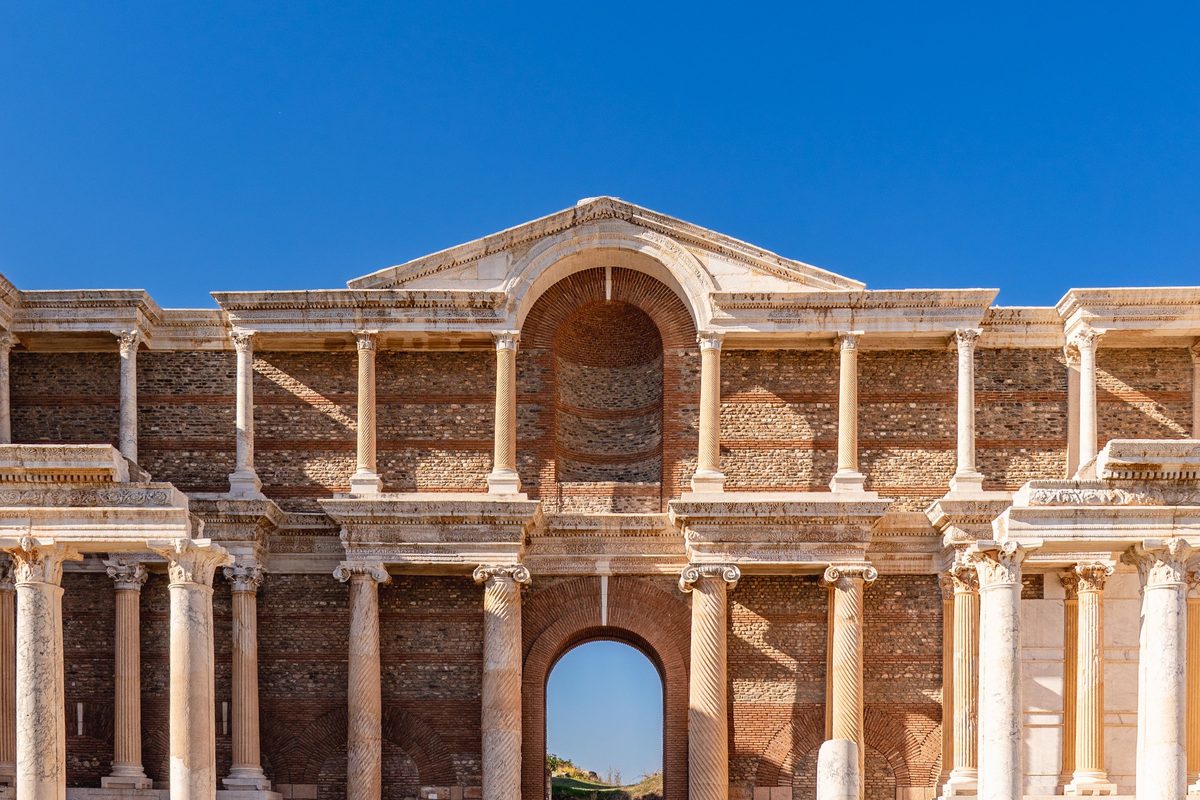
March opens the season rather than crowning it. The average high at Denizli is about 16°C (61°F), and the winter rains have not quite finished: Manisa still averages about ten rainy days in March. By April the inland highs reach about 21°C (70°F), and by May about 27°C (80°F), at Manisa and Denizli alike.
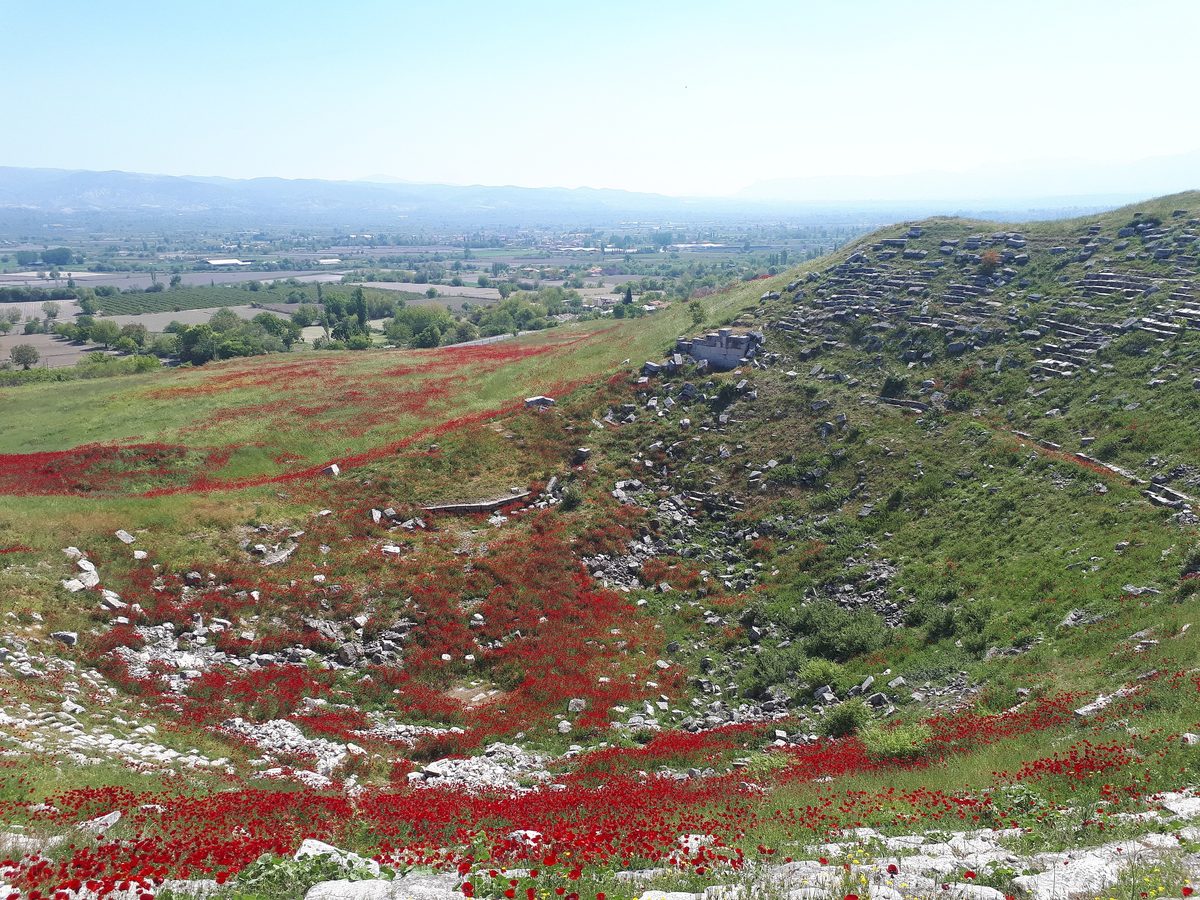
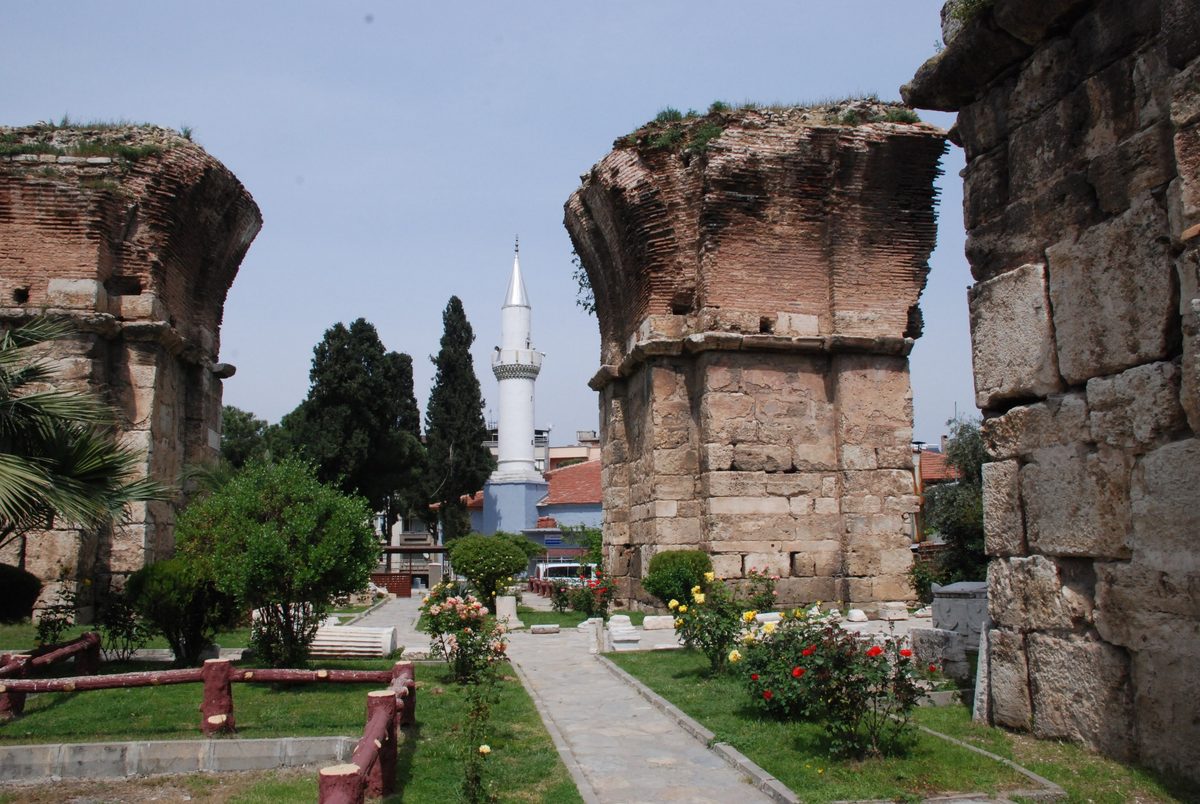
Spring is also when the ruins look their best. The grass between the stones is green, and in April and May poppies and white daisies come up among the column bases at Laodicea and Sardis. At Philadelphia, the rose beds in the small garden around the piers of the Basilica of St. John flower in late spring, with the minaret of a neighborhood mosque beyond.
The trade-offs are small. March and early April can bring a wet day, mornings are cool, and the polished marble paving at Ephesus and Laodicea is slippery in the rain, so shoes with grip matter more now than in summer. Easter weeks are the dates church groups ask for first, so if you have spring dates in mind for our private Seven Churches of Revelation tour, ask early and we will set the order of the sites around the holiday and its services.
Easter 2027 on the Seven Churches Road
In 2027 the two Easters fall five weeks apart. Western Easter is on Sunday, March 28, and Orthodox Easter, or Pascha, on Sunday, May 2, as the tables of Easter dates show.
The two dates make for different trips. A Western Holy Week at the end of March comes early in the season: cool mornings, highs in the high teens Celsius (mid-60s °F), fresh green fields, the chance of rain, and the winter timetable at the sites, which in İzmir province runs until April 1. Under that timetable the İzmir directorate of the Ministry of Culture and Tourism lists the Pergamon acropolis and the agora of Smyrna as open from 8:30 am to 5:30 pm, with ticket sales ending at 5 pm, so the sightseeing day is shorter. Orthodox Easter on May 2 falls in a warmer, fuller stretch of spring, with highs in the mid-20s Celsius (mid-70s °F) and the fields still in flower.
If you travel in Holy Week, we suggest keeping Easter Sunday itself for worship and planning the sites around it. If your group would like to read the letters together before you travel, our Advent reading plan for Revelation's seven letters walks through the letters in the four weeks of Advent.
Two Turkish holidays fall near these dates. The Ramadan Feast runs from March 9 to 11, 2027, and the Feast of Sacrifice from May 16 to 19, according to the Presidency of Religious Affairs calendar. Neither overlaps an Easter in 2027. Many Turkish families travel during both holidays, so the best-known sites, such as Ephesus, are busier on those days than in the weeks around them.
Summer: June to August
Summer is the hottest and driest stretch of the year. At Manisa the average high is 32.2°C (90°F) in June and 35.1°C (95°F) in July, with August almost the same, and Denizli stays within a degree of those figures. Rain is rare: about one rainy day a month in July and August at Manisa. The grass between the stones has turned gold, the light is hard and bright, and the marble throws the heat back at you.
Laodicea in high summer also makes one of the seven letters easy to understand. The city had no good water of its own and piped it in over several kilometers of stone channel, and our article on Laodicea, the lukewarm church explains why it arrived neither cold nor hot. When the letter says "because thou art lukewarm, and neither cold nor hot, I will spue thee out of my mouth" (Revelation 3:16), people who have just walked those streets in July hear it differently.
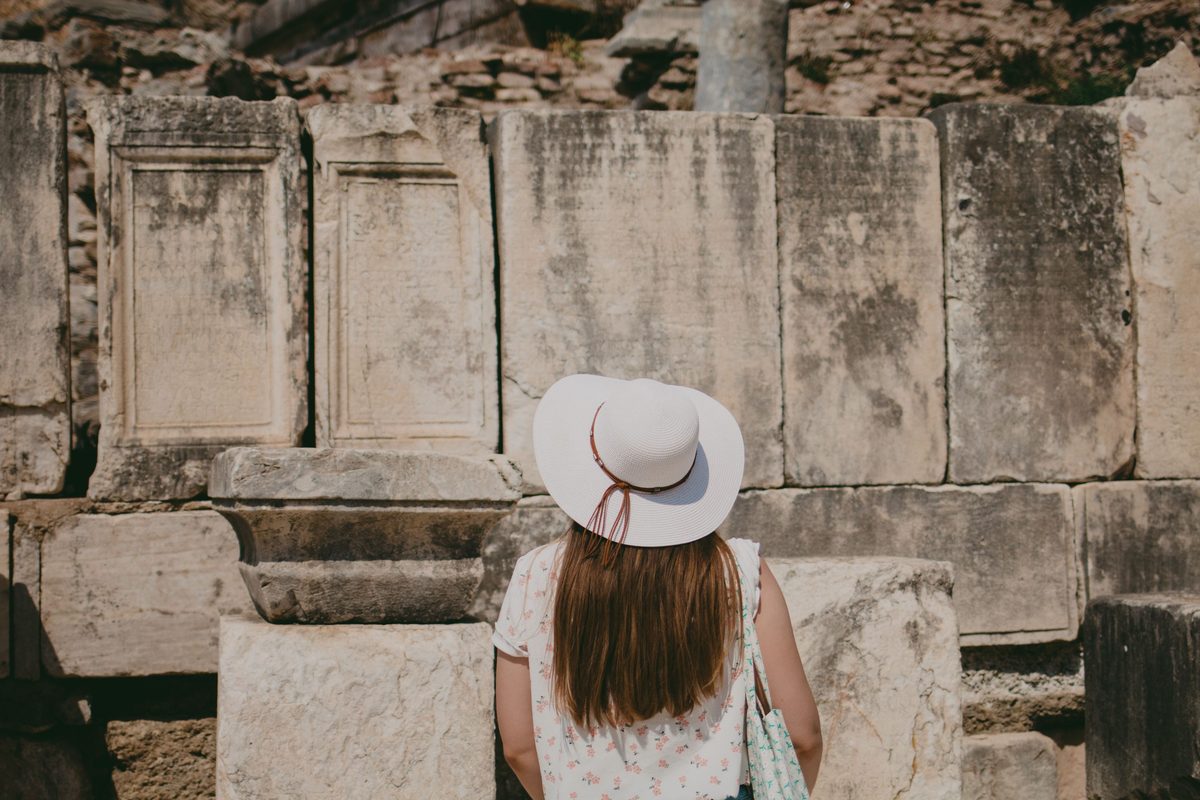
None of this rules out a summer trip; it changes how the day is built. On our private tour in summer we start early, take the exposed inland sites first while the air is still cool, spend the hottest hours on the road to the next site in the air-conditioned vehicle, and ride the cable car up the Pergamon acropolis rather than climbing. A wide-brimmed hat, a refillable water bottle and light long sleeves do more than sunscreen alone. Summer is also the high season for prices: hotel and transport rates in western Turkey peak in the cruise months of July to September.
Autumn: September to November
September starts warm, with an average high of about 30 to 31°C (86 to 88°F) inland, and cools through the month. By October the average high is about 24°C (75°F) at Manisa, Denizli and İzmir alike, and rain stays modest until November. That makes late September and October the counterpart of spring: the fields are dry and golden rather than green and flowered, but the light is softer, the stone is pleasant underfoot and the busiest weeks of the year are behind. November is cooler again, with highs near 18°C (64°F) and the first winter rains, and it is a quiet month at the sites.

Hotel and transport rates fall again after the cruise months, so autumn is often the gentlest season on the budget too. It is also when our private tour runs at its most relaxed: with no midday heat to plan around, there is room for longer stops at the large sites and an unhurried reading of each letter where it was first heard.
Winter: December to February
Winter is the wet season. Manisa averages about 13 to 14 rainy days and more than 125 millimeters of rain in each of December and January, and average highs fall to about 11 to 14°C (52 to 58°F) along the route. On a clear day after rain the air is sharp, and snow can lie on Mount Honaz above Laodicea while the ruins below stay green.
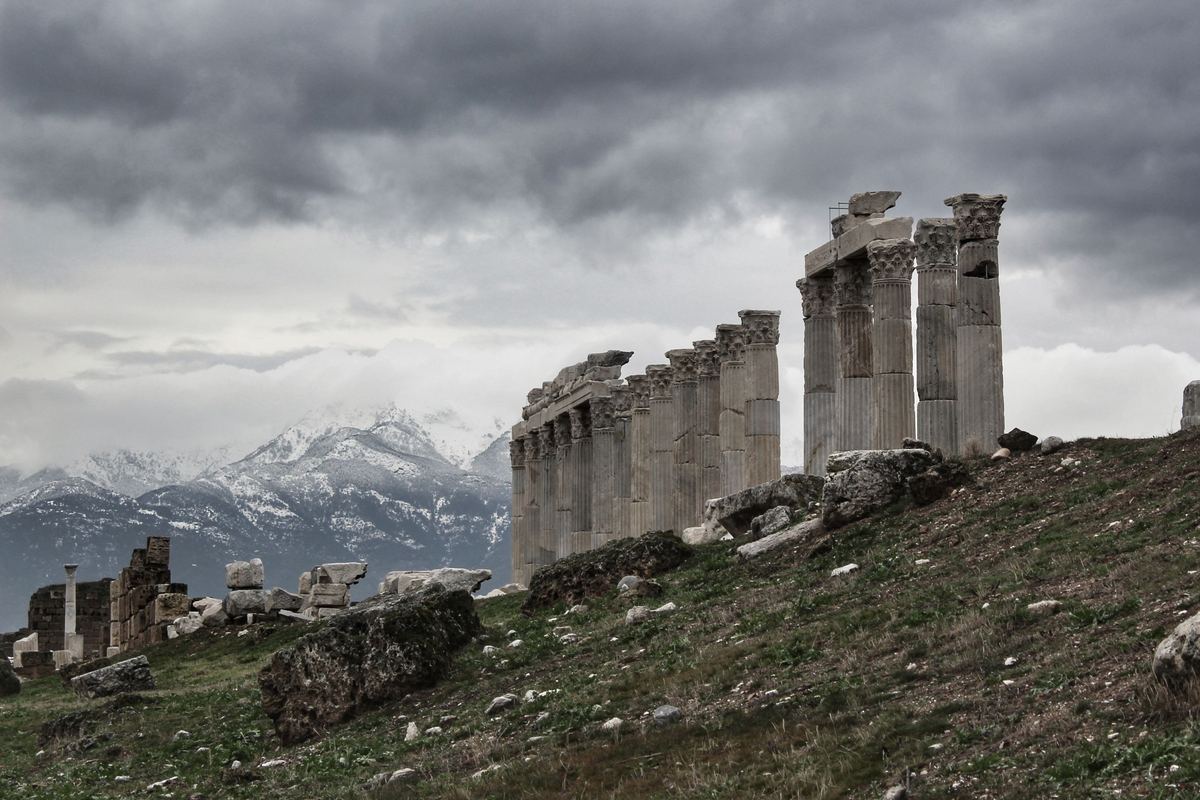
The days are short and the sites keep their winter hours, so there is less time for sightseeing than in summer. In return, winter is the quietest season at the sites. When we plan a winter trip, we build each day around the earlier closing times and the forecast, and we keep the order of the sites flexible, so that a wet morning can go to the smaller sites in town, such as Thyatira, Philadelphia or the agora of Smyrna, and a clear afternoon to the open ruins.
Patmos and the Sailing Season
If your trip includes Patmos, the sea keeps its own calendar. Crossings from Kuşadası to the island are reliable from spring to autumn; in winter sailings thin out and depend on the weather, so a winter itinerary carries a mainland alternative for that day. Patmos is in Greece, so bring your passport. The Cave of the Apocalypse and the Monastery of Saint John above Chorá together form a UNESCO World Heritage Site, and if you join the island to the circuit in Orthodox Holy Week, you will be there in the most important week of its church year. Our Seven Churches and Patmos tour joins the island to the full loop, and its page sets out how the crossing works.
Planning Around the Busy Days
Weather is half of timing; the other half is who else is at the sites. Ephesus is the busiest of the seven, above all on mornings when cruise ships are in at Kuşadası and during the Turkish holidays. The other six are far quieter on most days of the year, and tours of the seven churches of Revelation rarely meet a line at Thyatira or Philadelphia.
On every visit our agency's priority-pass access means we buy the tickets in advance and walk the group through the priority entrance rather than the ticket queue. That saves the wait, not the fee: the entrance fees are paid separately at the official Ministry price. Combined with an early start, it turns the busiest site on the route into a calmer morning.
If you are still deciding how long to stay, our post on how many days you need to see the seven churches compares the options side by side, the route article describes what is worth your time at each stop, and the free self-guided itinerary breaks the loop into printable days. When you have a month in mind, tell us your dates, your group size and whether Patmos is in or out, and we will tell you plainly how that season will feel on the road; the contact form is at the foot of this page.
Written by the Gezginol guide team. Sources: long-term climate averages of the Turkish State Meteorological Service for the Manisa, Denizli and İzmir stations; winter opening hours from the İzmir directorate of the Ministry of Culture and Tourism; 2027 holiday dates from the Presidency of Religious Affairs; and Revelation 3:15-16 on BibleGateway. Last reviewed: November 2026.
Frequently Asked Questions
What is the hottest month to visit the seven churches of Revelation? July, with August close behind. The long-term average high in July is 35.1°C (95°F) at Manisa and 34.8°C at Denizli, and Sardis and Laodicea have almost no shade. If you travel then, start early and visit the open inland ruins first.
Which single month is best? May or October. Both bring inland highs of about 24 to 27°C (75 to 80°F) and only a handful of rainy days. May adds green fields and wildflowers; October adds softer light and quieter sites after the summer.
When is Easter in 2027? Western Easter is on Sunday, March 28, 2027, and Orthodox Easter, or Pascha, on Sunday, May 2, 2027. Late March still falls under the winter timetable at the İzmir-province sites, while early May is warm and green.
Is it worth visiting the seven churches in winter? Yes, if you dress for rain. Highs run about 11 to 14°C (52 to 58°F), the sites are at their quietest, and the winter hours of 8:30 am to 5:30 pm at Pergamon and the agora of Smyrna still leave room for two sites a day. Patmos sailings are fewer in winter.
Is visiting seven churches on Holy Thursday the same as the seven churches of Revelation? No. The Seven Churches Visitation is a Catholic custom of visiting seven churches on the night of Holy Thursday, traced to Rome and to St. Philip Neri in the 1500s. The seven churches of Revelation are the seven congregations addressed in Revelation 2 and 3, whose cities stand in western Turkey today.
Can you visit Patmos in winter? Sometimes. Crossings from Kuşadası run regularly from spring to autumn, but in winter sailings are fewer and depend on the sea. For a winter trip we plan a mainland alternative for the Patmos day in case the boat does not sail.
Is the marble slippery after rain? Yes. The paving stones of Ephesus and Laodicea, worn smooth by centuries of feet, are slick when wet, and the slopes of the Pergamon acropolis are steep. In spring and winter, shoes with a good grip matter more than any other piece of gear.